Archive
Writing During Tencent’s Plunge
A friend asked why I had stopped writing. The market was too bleak, I said. I was not in the mood.
A friend asked me a few days ago why I had stopped writing. The market was too bleak, I said. I was not in the mood.
I thought that after the pandemic, with freedom restored and spring coming, 2023 would surely be a happier year than 2022.
Who knew.
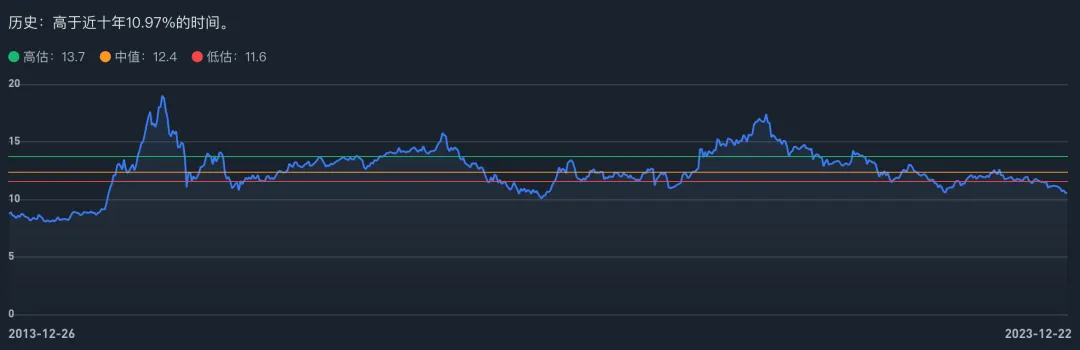
The CSI 300 had fallen below the panic level around November 1 of the previous year, with valuations close to the 2018 bear market.
Maybe it was not the absolute bottom, but it had to be somewhere near a relative bottom.
Hope became expectation, then disappointment, then irritation, then despair. I was one step away from swearing at the market.
No confidence at all. Was this the darkness before dawn?
Then Tencent plunged. It felt like the last straw.
What Should We Respect?
Most people know why Tencent fell: the National Press and Publication Administration released draft rules for the gaming industry. In a bear market, good news gets no response and bad news gets amplified. Officials later clarified the draft, and Tencent representatives said the impact on its gaming business could be managed. Still, this taught two basic lessons again:
1. Respect the market.
2. You can respond to the market, but you cannot predict it.
Whether it is the overall market, the adjustment in real estate, or a sudden black-swan event, you only understand Graham and Buffett’s “Mr. Market” after living through these things yourself.
What Should We Watch Out For?
If the market cannot be predicted and can only be handled, how do we handle it?
In an extreme situation, you need to stay alive in the market. The basic rules are simple:
- Do not borrow money. Do not borrow money. Do not borrow money.
- Use only money you will not need for three to five years, or longer.
- Diversify sensibly across industries and individual stocks. Do not bet everything on one name.
- Buy companies you understand and companies that make real money.
- Respect a margin of safety. Buying cheaply makes the psychological pain smaller.
On the second point, listen to your mother and your partner: do not go all in. Families always have large expenses waiting. A peaceful home matters.
What Should We Believe?
At the end, some spiritual chicken soup is unavoidable.
Take Charlie Munger, who had just left us:
Munger lost 31.9% in 1973, while the Dow Jones Industrial Average fell 13.1%. In 1974 he lost 31.5%, while the Dow fell 23.1%.
For someone early in an investing career, that could have been devastating. Yet after those two years, he and Buffett soon entered a long American bull market.
Munger put it this way:
If you cannot calmly accept a market decline of more than 50%, investing is not for you.
Why is investing so difficult? Why do most people eventually leave with losses? In the end it is a test of psychology. You need to catch the 5 percent—or even smaller—window, then endure the other 95 percent.
- Believe in cycles.
- Believe in mean reversion.
- Believe that investing ultimately earns money from the growth of businesses.
- And believe that perhaps this is life testing you before the next chance to make real money.
Originally published on WeChat Official Account, read the original.
← Back to essays