Archive
Jobs and Meditation
I had practiced meditation for more than two years and kept meaning to write about it. Laziness kept winning.
I had practiced meditation for more than two years and kept meaning to write about it. Laziness kept winning. Today I opened my WeChat Official Account dashboard and realized that almost two years had passed since my last post.
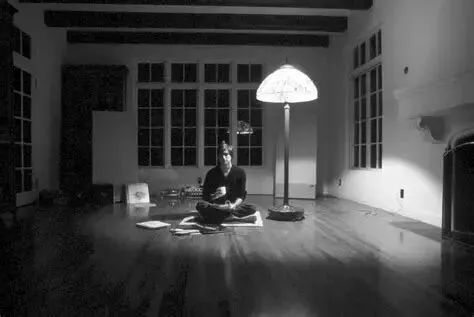
Yesterday marked the tenth anniversary of Steve Jobs’s death. His life needs little introduction when you are writing on an iPhone or Mac. Yet among all the legendary parts of that life, the small fragments about meditation are what I most wanted to understand. I collected stories and people from the period when Jobs first encountered meditation, and this is my first attempt at a meditation series.
Walter Isaacson wrote that Zen meditation sharpened Jobs’s appreciation of intuition, taught him to filter distractions and unnecessary things, and cultivated an aesthetic grounded in simplicity.
The moments in Jobs’s life most directly connected to meditation were all in his youth:
- Born in San Francisco in 1955, he grew up around Silicon Valley.
- In 1972, he entered Reed College, known for its free spirit and counterculture, and began reading about Zen Buddhism and practicing meditation.
- In 1974, after dropping out, he spent more than seven months in India looking for a spiritual teacher.
- In 1975, he continued meditation and Zen practice, met Kobun Chino Otogawa, and followed him as a spiritual teacher for life.
In the 1970s, as the Vietnam War wound down and material life improved, many Americans turned toward inner fulfillment. The New Age movement grew alongside that impulse: meditation, human potential, self-help, ancient civilizations, spiritual ideas, yoga, breathwork, and all kinds of wellness practices. It was decentralized but influential.
That environment shaped the people and books Jobs met. At Reed, he read Be Here Now, Ram Dass’s book about meditation and psychedelics. Later he loved Zen Mind, Beginner’s Mind by Shunryu Suzuki, who brought Zen to the United States and founded the San Francisco Zen Center. Kobun, Jobs’s lifelong friend and spiritual guide, had been Suzuki’s assistant in the Soto Zen tradition.

Jobs also had extreme eating habits: fasting, purging, or eating only one or two foods for weeks, such as carrots or apples. I suspect the New Age world influenced this too. His time at Reed had already exposed him to books about food as a spiritual practice.
His India trip began partly through the influence of his former roommate Robert Friedland, who had followed Neem Karoli Baba, a spiritual figure in the 1960s counterculture. Jobs later said that returning to America gave him an even stronger culture shock than arriving in India:
The people in the Indian countryside are different from us. We use our minds; they use intuition. Their intuition is far more developed. Intuition is very powerful—more powerful than intellect, in my view. It had a great impact on my work.
How do you cultivate intuition?
Vegetarianism and Zen, meditation and spirituality, psychedelics and rock music: through things that look strange to most people, Jobs kept an unusually alert mind. Apple colleagues called it “godlike clarity”: he could look at something and know where the problem was. That penetrating ability came from intelligence, but not only analytical calculation. It was the instantaneous gathering of information inside an extremely clear mind. We call that intuition.
How do you begin meditation? Jobs gave one answer:
If you sit and simply observe, you will see how restless your mind is. If you try to quiet it, it only makes it worse. But over time it does quiet down, and when it does, there is room to hear more subtle things. Your intuition starts to blossom and you see things more clearly. Your mind slows down, and you see a tremendous expanse in the moment. You see so much more than you could see before.
Originally published on WeChat Official Account, read the original.
← Back to essays