Archive
10 Value-Investing Books Worth Reading
Reading is one of the highest-return things I know. These ten are selected from 63 books read over four years.
People say this is the kind of headline that goes viral on Xiaohongshu. I do not know whether it lured you in. But the second half is true: these are my own reading notes.
I have read every one of these books, some more than once. These ten were selected from 63 books I had read. My Douban records are the proof.
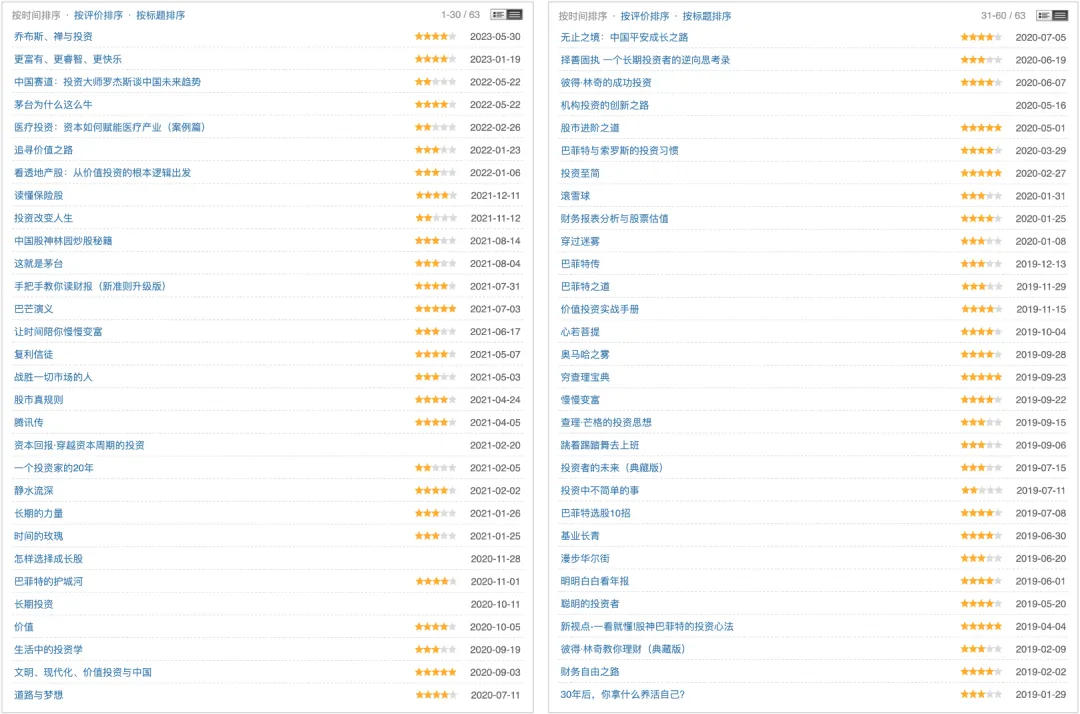
I have arranged them from abstract to concrete, large to small, and introductory to deeper material, so you can enter value investing step by step.
01 The Path to Financial Freedom: Every Gap Begins with Understanding
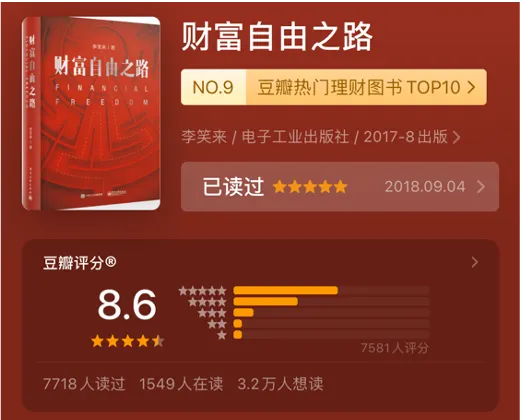
Have you had those strange moments of awakening? The first time I read Li Xiaolai’s book, it felt like a sudden clearing of the mind. It shook loose fixed ideas, and ideas I had never thought to examine: how to define financial freedom, how to think about a personal business model, compounding, and attention. It also led to the two habits I still keep: investing and meditation.
“A book I do not want to recommend to anyone, but one more people deserve to see.” — a Douban reader
02 Rich Dad Poor Dad: Bestsellers Are Sometimes Bestsellers for a Reason
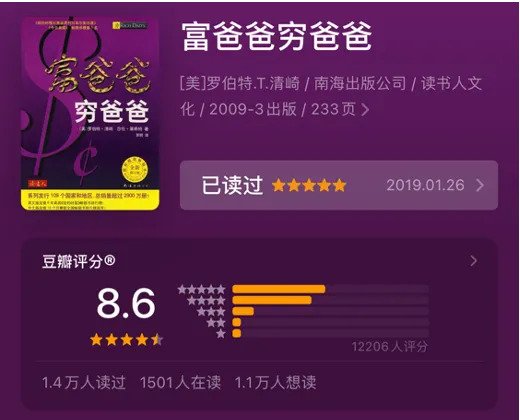
I had heard of this book for years and avoided it because it was a bestseller. After reading it, I only thought: I read it too late. You may not put every idea into practice immediately, but understanding and absorbing them is part of what reading is for. Its warning not to work only for money, and fall into employee thinking, is close to The Path to Financial Freedom’s idea of selling your time. That structure makes freedom of choice difficult.
Financial education is widely missing in China. When my child is older, this is one of the first books I will hand over.
03 Civilization, Modernization, Value Investing and China: The Premise Is Belief in the Country’s Future
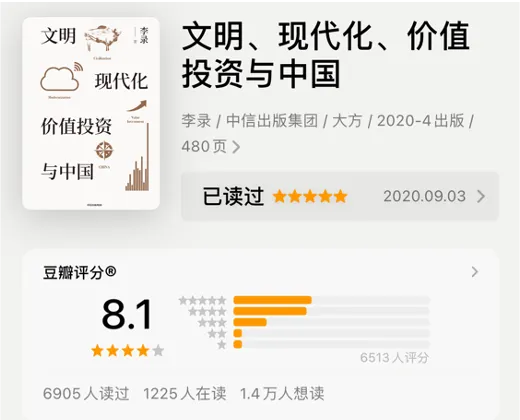
Buffett has said that being born in the United States was one reason for his exceptional returns. The macro premise of investing is the country’s own future. Li Lu’s book first explains the history and patterns of human modernization, in the spirit of Guns, Germs, and Steel, then turns to his value-investing ideas and practice in China.
Li Lu founded Himalaya Capital, managed part of Charlie Munger’s family assets, and is often described as a third-generation representative of value-investing thought.
04 The Buffett–Munger Chronicles: A History of Value Investing
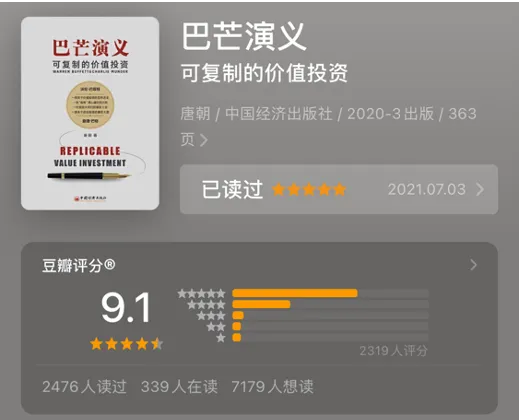
This is an evolutionary history of value investing. Written in the shape of a traditional Chinese chapter novel, it follows the growth of Buffett and Munger’s system and brings many modern investing masters onto the stage.
Tang Chao is one of China’s representative value investors. Three books in this list relate to his work, and I think this is his best. As one Douban reader put it: the market is full of inspirational investing books, but practical books that combine ideas, methods, cases, personal growth, and comparison are rare.
05 Ten Ways to Pick Stocks Like Buffett: A Practical Map of Buffett’s System
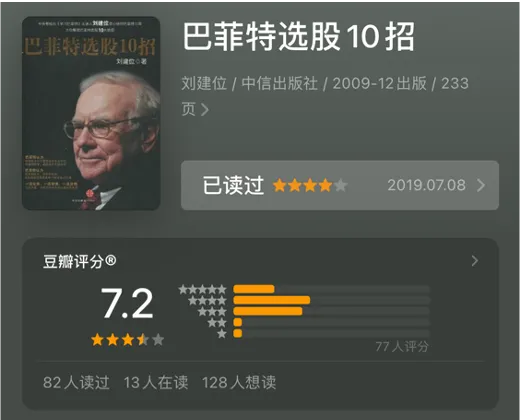
The first four books prepare the mind, the history, and the basic concepts. Now comes deeper understanding and practice. There are shelves of books on Buffett, from Berkshire annual reports to every possible explanation of his system. For usability, practical steps, and Chinese-market context, I chose Liu Jianwei’s Ten Ways to Pick Stocks Like Buffett.
Also useful: A New Viewpoint: Buffett’s Investment Wisdom Made Simple
06 Reading Annual Reports Clearly: An Introduction to Financial Statements
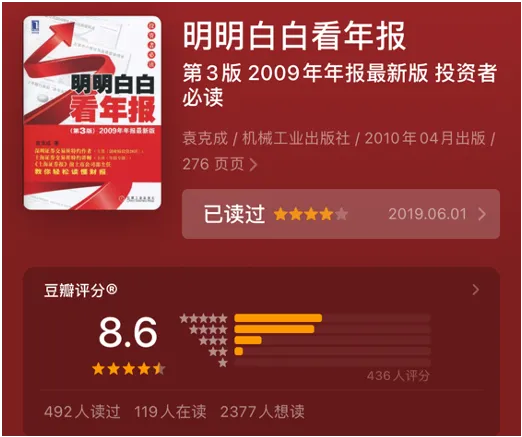
Not much needs to be said. I read three books on annual-report analysis and chose this one. If you finish it and want another reference, read Tang Chao’s Learn to Read Financial Statements Step by Step. Together they introduce the three financial statements, gross profit, net profit, discounted cash flow, P/E, and P/B.
07 The Value-Investing Field Manual: Does Value Investing Work in China?
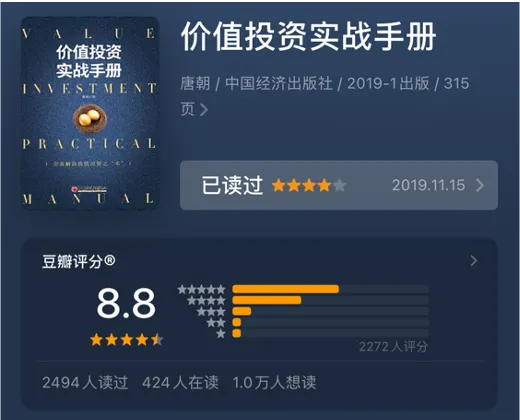
There is a permanent question in Chinese investing: does value investing work in the A-share market?
Tang Chao’s own record argues that it does. China’s market can be immature, volatile, full of noise, and described as long bear markets with short bull markets. Those qualities also create chances to practice Mr. Market and a margin of safety. His published record showed roughly seven times capital over nine years and near-25 percent annualized returns, including the pandemic years. He recorded the practice carefully in writing, which became this book.
Also useful: Getting Rich Slowly by Zhang Juying, another Chinese investor who moved from technical analysis to value investing and documented the process.
08 One Up on Wall Street: Learning from Another Great Investor
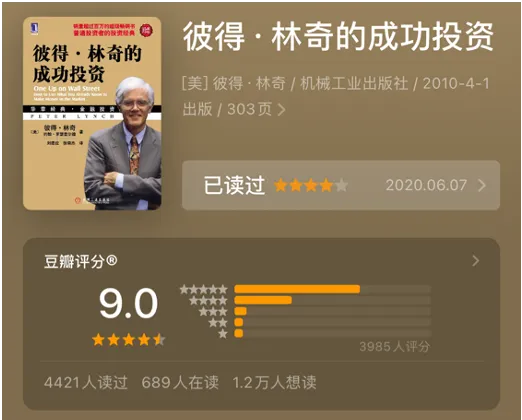
After so much Buffett, it helps to read other investing masters and make new connections. Fisher and Peter Lynch helped me most. Lynch gives away his thinking generously: how he selects stocks, judges companies, and finds winning ideas in everyday life. Time called him a leading fund manager, and it is easy to see why.
At the end, Lynch explains plainly why he left fund management at his peak and returned to family and life. It is admirable because it is not performative at all.
09 The Advanced Path of Stock Investing: The Best Chinese Book on Value Investing I Have Read
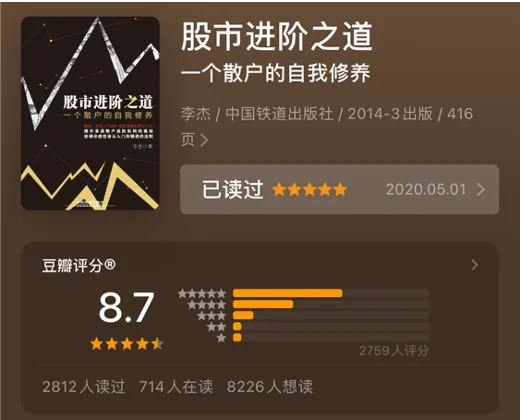
What does mastery mean? Even after I thought I had read a great deal and knew value investing well, this book gave me a sharp blow: the gap in understanding is always in front of you.
Li Jie, known on Xueqiu as Crystal Flyswatter, is a respected but somewhat mysterious Chinese value investor. He reportedly generated about 30 percent annualized returns through five bear-market years. Readers praise the clarity of his thought and writing with unusual intensity. In one sentence: this is the best investment book by a Chinese author that I have read.
Also useful: Investment Made Simple, another book that gave me a similar shock through the depth of its framework.
10 Richer, Wiser, Happier: What Is Investing Ultimately For?
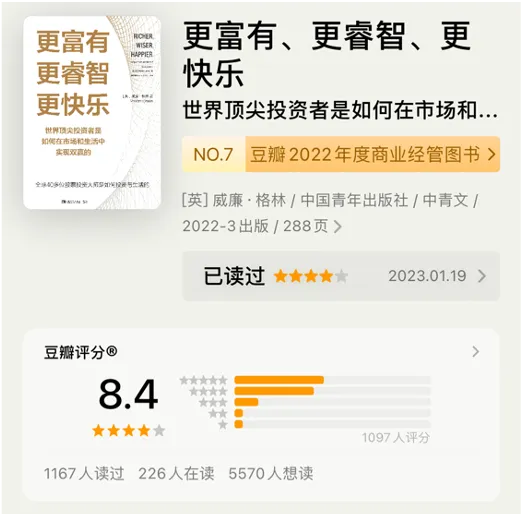
I will finish with this book, one I read only recently. What are we competing for in investing? And what is the point of investing in the end?
It introduces the investing wisdom of more than forty masters, including Buffett, Munger, John Templeton, and Howard Marks. Through close encounters with them, the author draws out their shared ways of living and thinking. Those common qualities are the answer the reader is looking for.
Did any of these make you want to read them? Which one would you start with?
I would love to hear.
Originally published on WeChat Official Account, read the original.
← Back to essays